
Table of Contents
25 Backend Programming Languages Explained: Uses, Benefits, Pros, Cons, Industry Demand, and Modern Developments (2026/2027 Guide)

Backend development is the part of software engineering that most users never see, yet almost every digital service depends on it. When someone transfers money, uploads a video, places an online order, sends a message, or signs into an application, backend systems handle much of the work behind the scenes.
These systems manage business logic, authentication, databases, payment processing, communication between services, background tasks, and the rules that determine how an application behaves.
But when developers begin exploring backend programming, one question appears repeatedly: Which backend programming language should I learn?
It sounds like a simple question. Unfortunately, many answers turn it into an unnecessary competition.
Python is often praised for its simplicity. Java is associated with large enterprise systems. PHP continues to support a substantial part of the web. Go is frequently selected for cloud infrastructure, while Rust attracts developers working on memory safety and systems performance.
None of these facts establishes one language as universally superior.
There is no single best backend programming language for every project. Languages have different design goals, ecosystems, learning curves, operational characteristics, and trade-offs. The right choice depends on what you are building, the people maintaining it, your infrastructure, and the problems you need to solve.
In this guide, we will explore 25 established, emerging, and specialized languages used for backend development. We will examine their practical applications, advantages, limitations, industry demand, and modern development direction, alongside links to their official websites and documentation.
What is a backend programming language?
A backend programming language is a language used to implement the server-side logic of an application.
Consider an online marketplace. A customer opens the application, searches for a product, adds it to a cart, and completes payment.
The frontend provides the interface, but the backend may need to verify inventory, calculate shipping, apply discounts, authorize payment, save the transaction, notify the seller, and update the order status.
Backend languages provide the instructions that make these operations possible.
Frontend
Web browser, mobile app, or desktop interface
Backend application
API endpoints, authentication, validation, business logic, and background jobs
Database
Payments
External services
Figure 1: A simplified application architecture. Real production systems may include queues, caches, load balancers, and multiple backend services.
A language alone does not determine whether a backend is reliable or scalable. Database design, caching, security, architecture, observability, deployment practices, and engineering discipline are equally important.

The 25 backend languages covered
| Language | Common backend applications |
|---|---|
| Python | APIs, AI services, automation |
| JavaScript | Web APIs, real-time applications |
| TypeScript | Structured web services, enterprise APIs |
| PHP | Websites, CMS, e-commerce |
| Java | Enterprise platforms, financial systems |
| C# | Business applications, cloud services |
| Go | Microservices, infrastructure tools |
| Rust | Performance-sensitive, safety-focused services |
| Kotlin | JVM services, Android-connected backends |
| Ruby | Web applications, startups |
| C++ | Low-latency systems, infrastructure |
| C | Embedded services, systems infrastructure |
| Swift | Server-side applications |
| Scala | Data-intensive and JVM services |
| Elixir | Concurrent, real-time platforms |
| Erlang | Telecommunications, fault-tolerant systems |
| Dart | APIs and full-stack Dart applications |
| Lua | Embedded scripting, gateway logic |
| Perl | Legacy systems, automation |
| Haskell | Strongly typed functional services |
| Clojure | Data processing, JVM applications |
| F# | Functional .NET services |
| OCaml | Compilers, typed services, specialized systems |
| Zig | Systems-oriented server components |
| Gleam | Typed services on BEAM and JavaScript runtimes |
Industry demand discussed below is qualitative rather than a claim about exact job-opening numbers. Hiring patterns differ by country, sector, company size, and experience level.
READ ALSO: The AI Chip War in 2026: Why NVIDIA, AMD, TSMC and Governments Are Fighting for Semiconductor Power
1. Python — A versatile language for APIs, automation, and AI

General-purpose, high-level programming language
Official website: python.org
Documentation: Python documentation
Python has developed into one of the most versatile languages in modern software engineering. Its readable syntax makes it approachable for beginners, while its ecosystem supports serious production applications.
Backend developers commonly use Python with Django, Flask, and FastAPI. Django provides many application features out of the box, Flask offers a lightweight foundation, and FastAPI is particularly useful for typed API development.
Common uses: REST APIs, administrative platforms, data-processing services, machine-learning integrations, automation, and internal business tools.
Benefits and advantages: Python encourages readable code, has extensive libraries, integrates naturally with data science and AI tooling, and allows teams to develop applications relatively quickly.
Disadvantages and limitations: Python’s execution overhead can matter in CPU-intensive workloads. The Global Interpreter Lock in traditional CPython builds also affects threading strategies, although free-threaded Python builds have expanded the available options. Dependencies and environment management require care.
Industry demand: Broad across web development, AI, analytics, automation, education, and enterprise engineering.
Modern developments: Python’s evolution includes improvements in typing, interpreter performance, concurrency, and free-threaded execution. These changes are particularly relevant for teams operating long-running services.
2. JavaScript — Backend development beyond the browser

JavaScript began as a browser scripting language but became a major backend option through Node.js and, more recently, runtimes such as Deno and Bun.
A development team can use JavaScript for both the frontend and backend, reducing the number of languages needed across a web project.
Common uses: Web APIs, real-time chat applications, collaboration software, notification systems, streaming services, and server-rendered applications.
Benefits and advantages: Shared language across the web stack, a large package ecosystem, event-driven I/O, and broad deployment support.
Disadvantages and limitations: Dynamic typing can allow certain errors to surface only during execution. Heavy CPU work can block an event loop unless it is moved to workers or separate processes. Dependency quality varies.
Industry demand: Broad, particularly in web product development, SaaS, agencies, and full-stack engineering.
Modern developments: Node.js continues to improve its runtime capabilities, while Deno and Bun explore different approaches to tooling, compatibility, security, and performance.
Official runtime documentation: Node.js, Deno, and Bun.
3. TypeScript — JavaScript with a stronger type system

Statically typed extension of JavaScript
Official website: typescriptlang.org
Documentation: TypeScript docs
TypeScript builds on JavaScript by adding a static type system. It is widely used in backend projects where developers want clearer contracts between services, database models, and application modules.
TypeScript commonly runs on JavaScript runtimes after compilation or type stripping, depending on the runtime and configuration.
Common uses: Enterprise APIs, SaaS platforms, modular backend systems, GraphQL services, and full-stack applications.
Benefits and advantages: Better editor assistance, type checking, maintainability, shared types, and improved collaboration in larger codebases.
Disadvantages and limitations: Types add design and maintenance work. Type assertions and poorly defined interfaces can create a false sense of safety. Static typing does not replace runtime validation.
Industry demand: Broad in modern web engineering, especially teams using Node.js, React, Angular, or NestJS.
Modern developments: TypeScript continues to refine its type system, compiler tooling, module support, and compatibility with evolving JavaScript runtimes.
4. PHP — A mature foundation for web applications

PHP remains deeply connected to the modern web. WordPress, Laravel, Symfony, and many business applications demonstrate its continuing relevance.
Although PHP is sometimes dismissed in online programming debates, the language has changed considerably since its earlier versions.
Common uses: Content management systems, e-commerce, booking platforms, customer portals, business applications, and REST APIs.
Benefits and advantages: Accessible hosting, established frameworks, extensive documentation, mature database support, and a large ecosystem of web development tools.
Disadvantages and limitations: Older PHP projects can contain inconsistent architecture and outdated coding practices. Modernizing legacy systems may require substantial effort. Some persistent-worker patterns also require different operational considerations from traditional PHP-FPM deployments.
Industry demand: Established and continuing, particularly in web agencies, WordPress development, Laravel applications, and maintenance of existing business systems.
Modern developments: Recent PHP generations have emphasized stronger typing features, performance, language consistency, and developer experience. Laravel and Symfony continue to expand the practical capabilities of PHP-based applications.
5. Java — A long-standing language for enterprise backend systems

Java is closely associated with large business applications, banking systems, insurance platforms, and enterprise services.
Its longevity is partly explained by its mature tooling, portability, backwards-compatibility culture, and extensive organizational knowledge.
Common uses: Banking platforms, transaction processing, enterprise APIs, logistics systems, and large distributed applications.
Benefits and advantages: Strong tooling, static typing, mature concurrency support, a substantial ecosystem, and dependable long-term maintenance options.
Disadvantages and limitations: Some Java applications involve considerable configuration and abstraction. JVM startup and memory requirements may matter in constrained environments, although modern frameworks and runtime options can reduce these costs.
Industry demand: Strongly established in enterprise software, financial services, telecommunications, and large organizations.
Modern developments: Virtual threads, records, pattern matching, and ongoing JVM improvements have changed how developers approach Java application design. Spring Boot, Quarkus, and Micronaut provide different approaches to backend development.
6. C# — Backend engineering across the .NET ecosystem

C# is a major option for organizations building APIs, business software, cloud platforms, and services that integrate with Microsoft technologies.
ASP.NET Core provides a mature framework for building cross-platform backend applications.
Common uses: Enterprise software, financial applications, SaaS services, authentication systems, and cloud APIs.
Benefits and advantages: Strong typing, excellent tooling, high-performance runtime options, integrated asynchronous programming, and cross-platform development.
Disadvantages and limitations: The .NET ecosystem has its own learning curve. Some organizations also maintain older .NET Framework applications that require modernization before they can fully benefit from newer tooling.
Industry demand: Well established in enterprise development, Microsoft-oriented organizations, consulting, and cloud services.
Modern developments: C# and .NET continue to evolve through language features, runtime optimizations, native ahead-of-time compilation, and improvements to ASP.NET Core.
7. Go — A practical language for cloud services

Compiled language designed for straightforward systems development
Official website: go.dev
Documentation: Go documentation
Go is particularly visible in cloud infrastructure, networking software, and microservice development.
Its relatively small language specification and built-in concurrency features appeal to teams that prefer straightforward code and deployment.
Common uses: Cloud APIs, networking services, infrastructure platforms, distributed systems, and command-line utilities.
Benefits and advantages: Fast compilation, built-in concurrency primitives, static binaries in many deployment scenarios, good tooling, and a compact language design.
Disadvantages and limitations: Its deliberately restrained language features can require more explicit code. Error handling can feel repetitive, and garbage collection may be a consideration in workloads with strict latency requirements.
Industry demand: Significant in cloud-native engineering, infrastructure, DevOps platforms, and backend services.
Modern developments: Go continues to refine its toolchain, generics, runtime performance, standard library, and profiling capabilities.
8. Rust — Memory safety and predictable systems performance

Compiled language emphasizing memory safety without garbage collection
Official website: rust-lang.org
Documentation: Rust documentation
Rust approaches memory management differently from garbage-collected languages. Its ownership and borrowing system allows many memory-safety errors to be detected during compilation.
This makes it attractive for services where memory efficiency, reliability, and predictable performance matter.
Common uses: Network infrastructure, high-performance APIs, databases, security-sensitive services, and systems components.
Benefits and advantages: Memory safety, strong type checking, control over resource usage, and good performance characteristics.
Disadvantages and limitations: Ownership and lifetime concepts require learning. Compilation can be demanding, and some application development tasks may take longer than in languages with more conventional memory management.
Industry demand: Growing in specialized infrastructure, security, systems engineering, and performance-sensitive services, though openings are generally more specialized than broad web-development roles.
Modern developments: Rust continues to evolve its async ecosystem, language ergonomics, tooling, and interoperability. Frameworks such as Axum and Actix Web support backend development.
READ ALSO: ACID in Programming: A Complete Guide to Database Transactions with Practical Implementation Examples
9. Kotlin — A modern JVM language for backend services
Kotlin is often associated with Android development, but it also has a growing presence in backend engineering. It works with the Java Virtual Machine and can use much of the existing Java ecosystem.
Common uses: REST APIs, financial services, enterprise applications, and mobile-connected backend systems.
Benefits and advantages: Concise syntax, null-safety features, Java interoperability, coroutines, and mature development tools.
Disadvantages and limitations: Compilation and framework complexity can increase in large projects. Teams unfamiliar with the JVM may need additional training.
Industry demand: Established in Android development and more selective in backend roles, particularly where Java and Kotlin coexist.
Modern developments: Kotlin’s compiler improvements, multiplatform development, and coroutine ecosystem continue to evolve. Ktor and Spring Boot are important backend options.
Official website: kotlinlang.org
Documentation: Kotlin documentation
10. Ruby — Product development with developer productivity in mind
Ruby is known for its expressive syntax and its association with Ruby on Rails.
Rails provides conventions for database access, routing, authentication integration, background jobs, and many other common web development tasks.
Common uses: SaaS platforms, e-commerce, business applications, customer portals, and startup products.
Benefits and advantages: Readable code, a productive web framework, a mature package ecosystem, and established conventions.
Disadvantages and limitations: Ruby may require more runtime resources than some compiled alternatives. CPU-intensive workloads can require careful scaling or native extensions.
Industry demand: Established but concentrated in organizations with Rails applications and teams that value the ecosystem.
Modern developments: Ruby continues to improve runtime performance, typing-related tooling, and concurrency support. Rails continues to evolve its application-development conventions.
Official website: ruby-lang.org
Documentation: Ruby documentation
11. C++ — Low-level control for demanding backend workloads
C++ is not typically the first language beginners encounter when building a conventional web API. Nevertheless, it plays an important role in infrastructure, databases, financial technology, and latency-sensitive services.
Common uses: Database engines, trading systems, media processing, network servers, and infrastructure software.
Benefits and advantages: Fine-grained control over resources, efficient native execution, extensive libraries, and mature tooling.
Disadvantages and limitations: Memory management, undefined behavior, complex language features, and build systems can increase development and maintenance costs.
Industry demand: Established in specialized systems, finance, telecommunications, gaming infrastructure, and performance engineering.
Modern developments: The language continues to evolve through newer C++ standards, improved library facilities, and safer programming practices.
Official website and standards information: isocpp.org
Learning and reference resources: C++ getting started and cppreference (community-maintained).
12. C — A foundational language for systems infrastructure
C has influenced generations of programming languages. It remains important in operating systems, embedded software, networking libraries, and database internals.
Backend developers may encounter C indirectly through the software that powers their applications.
Common uses: Server infrastructure, embedded network services, database components, native libraries, and operating-system interfaces.
Benefits and advantages: Small runtime requirements, hardware-level control, portability, and extensive systems libraries.
Disadvantages and limitations: Manual memory management, memory-safety risks, and limited high-level abstractions require careful engineering.
Industry demand: Established in systems programming, embedded development, infrastructure maintenance, and security-related work.
Modern developments: C continues to evolve through language-standard revisions and compiler tooling. Memory-safety concerns have also encouraged additional testing, analysis, and selective adoption of safer alternatives.
Official standards information: ISO C working group
Documentation and references: C reference (community-maintained).
13. Swift — Extending Apple’s language into server development
Swift is widely known for Apple-platform development, but it can also be used to build backend services.
Frameworks such as Vapor provide HTTP routing, database integration, and other web application capabilities.
Common uses: APIs, server-side business logic, services supporting Apple applications, and specialized backend systems.
Benefits and advantages: Strong typing, modern language features, memory-safety mechanisms, and code-sharing opportunities with Swift-based clients.
Disadvantages and limitations: The server-side ecosystem is smaller than those of Java, JavaScript, or Python. Hiring and deployment expertise can be more specialized.
Industry demand: Primarily associated with Apple development, with a smaller server-side market.
Modern developments: Swift’s concurrency model, cross-platform tooling, and server ecosystem continue to mature.
Official website: swift.org
Documentation: The Swift Programming Language
14. Scala — Combining object-oriented and functional programming
Scala runs primarily on the JVM and combines object-oriented and functional programming techniques.
It has been used in large data-processing systems and backend services where expressive type systems and concurrency libraries are valuable.
Common uses: Data-intensive services, distributed applications, enterprise APIs, and event-processing systems.
Benefits and advantages: Java interoperability, expressive abstractions, functional programming support, and advanced type-system capabilities.
Disadvantages and limitations: Advanced features can create a steep learning curve. Build times and library choices can also complicate projects.
Industry demand: Specialized, particularly in data engineering, JVM-heavy organizations, and functional programming teams.
Modern developments: Scala 3 has introduced substantial language changes, including new syntax and type-system capabilities. Libraries such as Cats Effect and ZIO remain relevant to backend development.
Official website: scala-lang.org
Documentation: Scala documentation
15. Elixir — Concurrent applications built on the BEAM
Elixir runs on the Erlang virtual machine, commonly called the BEAM.
Its concurrency and fault-tolerance model makes it interesting for applications that maintain many independent processes, connections, or background activities.
Common uses: Real-time applications, messaging platforms, collaborative systems, event-driven services, and APIs.
Benefits and advantages: Lightweight processes, supervision trees, fault tolerance, and a productive web ecosystem through Phoenix.
Disadvantages and limitations: Its functional programming model may be unfamiliar. The ecosystem and hiring pool are smaller than those of mainstream backend languages.
Industry demand: Specialized, especially in real-time applications and organizations already using the BEAM ecosystem.
Modern developments: Elixir continues to evolve its developer tooling, language features, and Phoenix ecosystem. LiveView provides an additional approach to interactive web applications.
Official website: elixir-lang.org
Documentation: Elixir documentation
16. Erlang — Fault tolerance as a core design principle
Erlang was developed for telecommunications environments where systems needed to continue operating despite individual component failures.
Its process model and supervision strategies remain valuable in distributed backend engineering.
Common uses: Telecommunications, messaging infrastructure, distributed systems, and highly concurrent applications.
Benefits and advantages: Process isolation, fault recovery, message passing, and mature distributed-system capabilities.
Disadvantages and limitations: Syntax and programming conventions can be unfamiliar. The broader web-development ecosystem is smaller than that of many general-purpose languages.
Industry demand: Specialized in telecommunications, messaging systems, and organizations maintaining BEAM applications.
Modern developments: Erlang/OTP continues to evolve its runtime, libraries, diagnostics, and security features.
Official website: erlang.org
Documentation: Erlang/OTP documentation
17. Dart — Beyond Flutter and mobile interfaces
Dart is closely associated with Flutter, but it can also power backend services.
Its server-side capabilities allow teams to use Dart for APIs, command-line applications, and supporting services.
Common uses: Web APIs, mobile application backends, internal services, and full-stack Dart projects.
Benefits and advantages: A consistent language across certain client and server projects, asynchronous programming, sound null safety, and modern tooling.
Disadvantages and limitations: The backend ecosystem is smaller than Dart’s Flutter ecosystem. Developers may find fewer production examples or third-party integrations for specialized server workloads.
Industry demand: Primarily driven by Flutter development, with more limited standalone backend opportunities.
Modern developments: Dart continues to improve language features, package tooling, compilation, and its broader application ecosystem.
Official website: dart.dev
Documentation: Dart guides
18. Lua — Lightweight scripting inside larger systems
Lua is a compact scripting language designed to be embedded in applications.
Rather than powering every component of a conventional web platform, Lua is often used to customize the behavior of existing servers and infrastructure.
Common uses: API gateway scripting, request processing, embedded business rules, Redis scripting, and Nginx/OpenResty extensions.
Benefits and advantages: Small footprint, simple embedding, flexibility, and relatively straightforward language design.
Disadvantages and limitations: Fewer batteries-included facilities for large standalone backend applications. Complex applications require disciplined architecture and additional libraries.
Industry demand: Specialized in embedded systems, infrastructure customization, and applications with Lua scripting support.
Modern developments: Lua’s ecosystem continues through its core implementation and related runtimes such as LuaJIT, alongside infrastructure projects that embed Lua.
Official website: lua.org
Documentation: Lua reference manuals
19. Perl — A language with a long history in automation and web services
Perl played an important role in early web programming and remains present in system administration, text processing, and established enterprise applications.
Its extensive history means some organizations still maintain business-critical Perl systems.
Common uses: Automation, text-processing pipelines, legacy web applications, administration, and integration services.
Benefits and advantages: Powerful text-processing facilities, mature libraries, and strong compatibility with existing Perl code.
Disadvantages and limitations: Older codebases can be difficult to understand, especially when written with highly compact syntax. The modern web-development ecosystem is less prominent than those of several alternatives.
Industry demand: Mostly concentrated in legacy maintenance, automation, and specialized organizations.
Modern developments: Perl continues to receive maintenance, language updates, and ecosystem improvements. Modern development practices can make Perl projects substantially easier to maintain.
Official website: perl.org
Documentation: Perl documentation
READ ALSO: How to Start a Career in Tech: A Complete Beginner’s Guide
20. Haskell — Functional programming with strong type guarantees
Haskell is a functional programming language known for its expressive type system, purity, and emphasis on reasoning about program behavior.
It can be used for backend development, although its adoption is more specialized than that of mainstream web languages.
Common uses: Financial software, compilers, research-oriented systems, specialized APIs, and applications requiring sophisticated domain modeling.
Benefits and advantages: Strong static typing, expressive abstractions, pure functions, and an emphasis on correctness.
Disadvantages and limitations: The learning curve can be significant. Library selection, hiring, and certain deployment workflows may require specialized experience.
Industry demand: Niche, with opportunities in functional programming teams, finance, and specialized engineering organizations.
Modern developments: GHC and the Haskell ecosystem continue to improve language extensions, tooling, libraries, and performance.
Official website: haskell.org
Documentation: Haskell documentation
21. Clojure — Functional backend development on the JVM
Clojure is a Lisp-family language designed around immutable data and functional programming.
It commonly runs on the JVM, providing access to Java libraries while offering a distinct programming style.
Common uses: Data-driven applications, enterprise services, APIs, event processing, and business systems.
Benefits and advantages: Immutable data structures, interactive development, Java interoperability, and a compact core language.
Disadvantages and limitations: Lisp syntax takes adjustment, and dynamic typing requires deliberate testing and validation. Its hiring market is smaller than Java’s.
Industry demand: Specialized in organizations that value functional programming and JVM interoperability.
Modern developments: Clojure continues to refine its tooling, libraries, and runtime integration while maintaining a conservative approach to language evolution.
Official website: clojure.org
Documentation: Clojure getting started
22. F# — Functional programming within .NET
F# is a functional-first language in the .NET ecosystem. It supports concise domain modeling and can interoperate with .NET libraries.
For teams already using Microsoft infrastructure, F# provides a different way to express business logic without leaving the platform.
Common uses: Financial systems, data processing, business-rule engines, APIs, and analytical services.
Benefits and advantages: Type inference, immutable-first programming, concise code, .NET interoperability, and expressive domain models.
Disadvantages and limitations: Smaller community and hiring pool than C#. Some .NET libraries are designed primarily with C# conventions in mind.
Industry demand: Specialized, particularly in finance, data-oriented systems, and functional programming teams.
Modern developments: F# evolves alongside .NET, with improvements to compiler tooling, language features, and interoperability.
Official website: fsharp.org
Documentation: F# documentation
23. OCaml — Strongly typed functional programming for specialized services
OCaml combines functional programming with imperative and object-oriented features.
It is used in compilers, developer tools, financial software, and certain backend applications.
Common uses: Specialized APIs, compilers, financial services, static analysis, and infrastructure tooling.
Benefits and advantages: Strong type inference, expressive data modeling, native compilation, and good support for building reliable abstractions.
Disadvantages and limitations: A smaller ecosystem for mainstream web applications and a narrower hiring market. Some third-party services provide fewer ready-made OCaml integrations.
Industry demand: Niche, particularly in compiler engineering, finance, and specialized systems development.
Modern developments: OCaml’s multicore support and effects-related work have expanded concurrency possibilities. The ecosystem continues to develop tooling and libraries for modern applications.
Official website: ocaml.org
Documentation: OCaml documentation
24. Zig — Explicit systems programming for modern infrastructure
Zig is a relatively young systems programming language that emphasizes explicit control, predictable behavior, and a practical toolchain.
It is not yet a mainstream choice for ordinary CRUD applications, but it is relevant to developers building native infrastructure and server components.
Common uses: Native server components, networking utilities, embedded services, infrastructure tools, and systems libraries.
Benefits and advantages: Explicit memory management, compile-time capabilities, C interoperability, and integrated build tooling.
Disadvantages and limitations: A younger ecosystem, fewer established high-level backend frameworks, and greater responsibility for memory management. API changes can also create migration work.
Industry demand: Emerging and specialized rather than broadly established.
Modern developments: Zig 0.17.0 was released on October 1, 2026. This illustrates its active development, although teams should assess compatibility and ecosystem maturity before adopting it for long-lived production systems.
Official website: ziglang.org
Documentation: Zig language reference
25. Gleam — Typed functional programming for concurrent services
Gleam is a newer statically typed functional language that can compile to Erlang or JavaScript.
Its Erlang target allows applications to run on the BEAM, giving Gleam access to the runtime’s concurrency and fault-tolerance model.
Common uses: Typed backend services, concurrent applications, APIs, and services integrating with the Erlang ecosystem.
Benefits and advantages: Static typing, a relatively approachable functional syntax, immutable data, and interoperability with existing BEAM libraries.
Disadvantages and limitations: A young ecosystem, fewer tutorials and integrations, and limited job opportunities compared with established backend languages.
Industry demand: Emerging, primarily among functional programming enthusiasts and BEAM ecosystem developers.
Modern developments: Gleam continues to develop its language, standard library, tooling, and interoperability. Its external-function mechanism allows applications to use Erlang, Elixir, or JavaScript libraries where necessary, although external code is not type-checked by Gleam itself.
Official website: gleam.run
Documentation: Gleam documentation

Understanding backend language demand in 2026/2027
A programming language’s popularity, employer demand, developer satisfaction, and technical suitability are four different things.
For example, a language may have a relatively small number of developers but be highly valued in a specialized industry. Another language may have millions of users because it powers websites, educational projects, automation, and frontend applications simultaneously.
The Stack Overflow 2025 Developer Survey reported substantial growth in Python usage and particularly high developer admiration for Rust, Gleam, Elixir, and Zig. These results reveal interest and experience among respondents, but they do not directly measure job vacancies or salaries.
Developer admiration in the 2025 survey
Percentage of users of each language who wanted to continue using it. Not a ranking of backend performance or hiring demand.
0% 25% 50% 75% 100% Rust Gleam Elixir Zig
Source: Stack Overflow 2025 Developer Survey

For career planning, it is more useful to distinguish between several kinds of opportunities.
| Career direction | Languages worth investigating |
|---|---|
| General web backend development | JavaScript, TypeScript, PHP, Python, Ruby |
| Enterprise software | Java, C#, Kotlin, Scala |
| AI-connected backend services | Python, TypeScript, Go |
| Cloud infrastructure | Go, Rust, Java, C++ |
| High-concurrency systems | Erlang, Elixir, Gleam, Go |
| Low-level systems engineering | C, C++, Rust, Zig |
| Functional programming roles | Haskell, Scala, Clojure, F#, OCaml |
| Mobile ecosystem backends | Kotlin, Swift, Dart |
These are areas of relevance, not exclusive assignments. A language can be suitable for many categories beyond those shown.

How to choose a backend language without turning it into a competition
Suppose three teams are building different applications.
One team is developing a content-management platform for a publishing company. Another is developing an AI-powered document processing service. A third is building a networking component with strict resource constraints.
All three teams need backend software, but their requirements differ considerably.
The publishing platform may benefit from an established CMS ecosystem. The AI service may need close integration with machine-learning libraries. The networking component may prioritize resource control and predictable execution.
It would make little sense to demand that all three teams use the same language simply because that language is trending.
Backend language evaluation checklist
READ ALSO: Best AI Laptops for Programming and Software Development in 2027
0 of 6 reviewed
Existing team expertise
Languages your developers already maintain confidently
Library and framework support
Authentication, databases, queues, payments and integrations
Runtime requirements
Latency, throughput, concurrency and memory limits
Deployment environment
Hosting, containers, serverless and operating systems
Long-term maintenance
Testing, updates, documentation and hiring
Project-specific constraints
Regulatory, integration and organizational requirements
Reset checklist
A responsible evaluation should also include a small prototype. Build a representative API endpoint, connect it to a database, test error handling, deploy it, and measure behavior under a realistic workload.
That will tell you considerably more than a generic language benchmark.
Backend languages and the rise of AI-assisted development
AI-assisted coding is changing development workflows, but it has not eliminated the need to understand programming languages.
AI tools can help developers generate boilerplate, explain unfamiliar libraries, write tests, and explore migration strategies. They can also introduce incorrect assumptions, insecure code, or subtle architectural problems.
The 2025 Stack Overflow survey found widespread AI-tool adoption alongside concerns about reliability. In its published results, 66% of respondents identified AI-generated solutions that were almost correct as a major frustration.
For backend engineering, this distinction matters.
A payment-processing function that looks reasonable but mishandles retries can cause duplicate charges. An authentication endpoint with an overlooked authorization check can expose private records. A database transaction implemented incorrectly can leave financial data inconsistent.
AI-generated code still needs testing, security review, and developers who understand the runtime and framework.
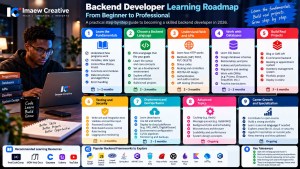
A practical learning roadmap for beginners
Rather than learning 25 languages simultaneously, start with one language and develop a working understanding of backend engineering.
Learn programming fundamentals. Understand variables, functions, data structures, control flow, error handling, and basic algorithms.
Learn how HTTP and APIs work. Study requests, responses, status codes, JSON, routing, authentication, and authorization.
Connect a database. Learn SQL, relationships, indexes, migrations, transactions, and how to avoid unsafe queries.
Build a complete application. Create a small booking platform, inventory system, blog API, or expense tracker.
Learn testing and security. Cover input validation, password hashing, access controls, rate limiting, logging, and automated tests.
Deploy and maintain the application. Use Git, environment configuration, Linux basics, containers where appropriate, monitoring, and backups.
Explore a second language. Choose one that introduces a genuinely different approach, such as moving from Python to Go or from JavaScript to Elixir.
The goal is not to collect programming-language names. It is to become capable of designing, building, debugging, securing, and maintaining backend systems.
Frequently asked questions
Which backend programming language is easiest for beginners?
Python and JavaScript are often approachable starting points because of their learning resources and relatively accessible syntax. PHP, Ruby, and other languages can also be suitable depending on the learner’s goals. Ease of learning is subjective.
Is PHP still relevant in 2026?
Yes. PHP continues to support content-management systems, business applications, and frameworks such as Laravel and Symfony. Its suitability depends on the project and its technical requirements.
Can Python handle large-scale backend applications?
Yes. Python can be used in large production systems. Scalability depends on architecture, workload characteristics, infrastructure, and operational design, not merely the programming language.
Are Go and Rust replacing Java and C++?
They are providing additional options in areas such as infrastructure and systems development. This does not mean existing languages are disappearing. Large organizations continue to operate substantial systems in Java, C++, and many other languages.
Should a backend developer learn multiple languages?
Learning one language thoroughly is a good foundation. Additional languages become valuable when they help solve new problems, work with existing systems, or explore different programming models.
Are newer backend languages better than older ones?
Not inherently. A newer language may offer a useful type system, concurrency model, or tooling approach. An older language may have a mature ecosystem, experienced maintainers, and decades of production knowledge.
Can multiple backend languages be used in one application?
Yes. A platform might use Java for transaction services, Python for machine-learning tasks, and Go for infrastructure components. This can be useful when justified, although it increases operational complexity.
Conclusion: Learn the engineering, not just the language
Backend development is far bigger than a debate between Python, Java, PHP, Go, Rust, or any other language.
Every language in this guide exists within a different technical history and ecosystem. Some prioritize developer productivity. Others emphasize explicit resource control, fault tolerance, interoperability, or expressive type systems.
The differences matter, but they do not produce a universal winner.
A well-designed application written in PHP can serve its users reliably. A poorly designed service written in Rust can still fail. A Java application can scale successfully, and a Python service can process demanding workloads when its architecture is appropriate.
The quality of backend engineering depends on the decisions surrounding the language as much as the language itself.
For beginners, the most useful starting point is a real project. For experienced developers, the next step is understanding the trade-offs of the tools available.
The strongest backend developers are not necessarily those who know the most languages. They are those who understand the systems they build, the problems they solve, and the consequences of their technical decisions.

Author: Zazasco
Am a professional with more than 5 years of experience in Graphic designing, Content Creation, Web/Mobile Development, Animation, Vfx, Photo/Videographer, Branding. Am so much passionate about what I do and always researching to improve myself to meet up with trends and demands, I love teaching and also open to learning new skills. For more info. About me send me a message indicating your questions and get a reply from me.


